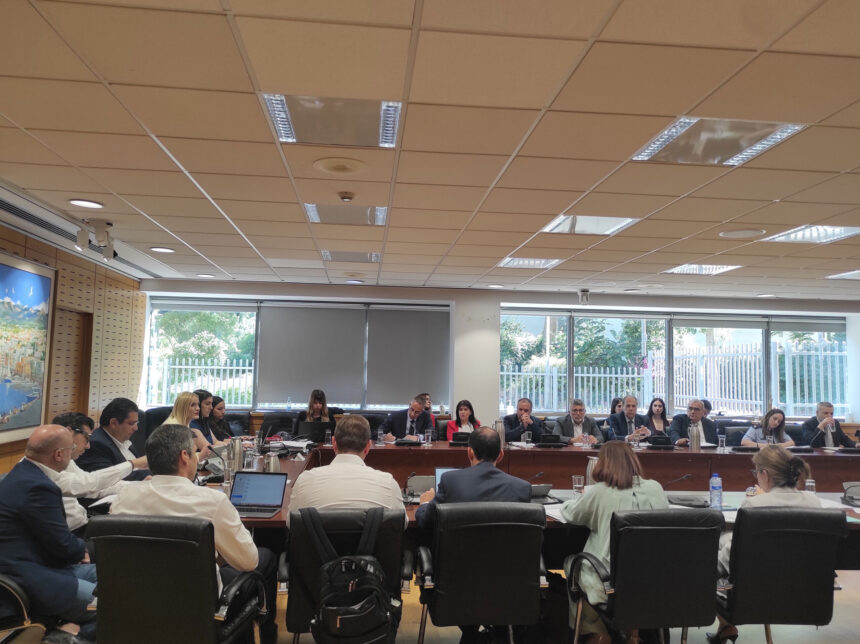
The government intends to table legislation granting investigative powers to the Anti-Corruption Authority, as confirmed by Giorgos Panteli, the permanent secretary of the justice ministry, during a session of parliament’s legal affairs committee on Wednesday. This marks a notable shift towards enhancing the authority’s capabilities in tackling corruption.
The announcement came amidst a debate on competing proposals from the ruling party Disy and the opposition movement Alma, both aimed at enabling the authority to carry out criminal investigations more effectively.
The legal service has expressed its support for this significant reform. Assistant attorney-general Savvas Angelides noted the importance of fostering a ‘positive and constructive’ dialogue regarding the proposed changes. He advocated for a comprehensive government bill rather than piecemeal amendments, suggesting that a unified approach would be more beneficial.
In a statement, Haris Poyiatzis, chairman of the Anti-Corruption Authority, indicated readiness to assume these new investigative powers but raised concerns about the authority’s chronic understaffing. Currently, the authority operates with only 16 staff members, with most lacking permanent employment status.
Following the committee meeting, Fotini Tsiridou, chairwoman of the legal affairs committee and a Disy MP, confirmed that parliament has set a timeline for the executive branch to submit a draft bill by October. This timeline aims to ensure a swift progression towards enhancing the authority’s operational efficiency.
The two legislative proposals currently under discussion present contrasting methods for appointing investigators. The Disy proposal suggests that the Anti-Corruption Authority appoint independent criminal investigators from a list curated by the Cyprus Bar Association and sanctioned by the attorney-general. In contrast, Alma’s proposal would grant the authority the autonomy to appoint investigators directly upon identifying potential criminal offences.
Poyiatzis expressed a preference for Alma’s approach, arguing that the Disy model would compromise the authority’s independence. He emphasised the necessity for the authority to retain control over its investigations, rejecting any notion that these should be supervised by the attorney-general.
Statistics shared during the meeting revealed that the authority has received 849 complaints since its establishment in 2022, of which 580 have been investigated, leaving 269 pending. The authority’s limited resources have hampered its effectiveness, drawing criticism regarding its capacity to handle cases promptly.
The procedural dynamics of the meeting were briefly disrupted when Alma MP Michalis Paraskevas questioned Angelides’ involvement, citing pending cases against him related to the Anti-Corruption Authority. Angelides firmly rejected these claims, maintaining his position within the discussions.
Established to investigate corruption allegations and bolster transparency in public life, the Anti-Corruption Authority has faced ongoing scrutiny over its lack of independent investigative powers, which critics argue have stymied its efficacy since its inception.