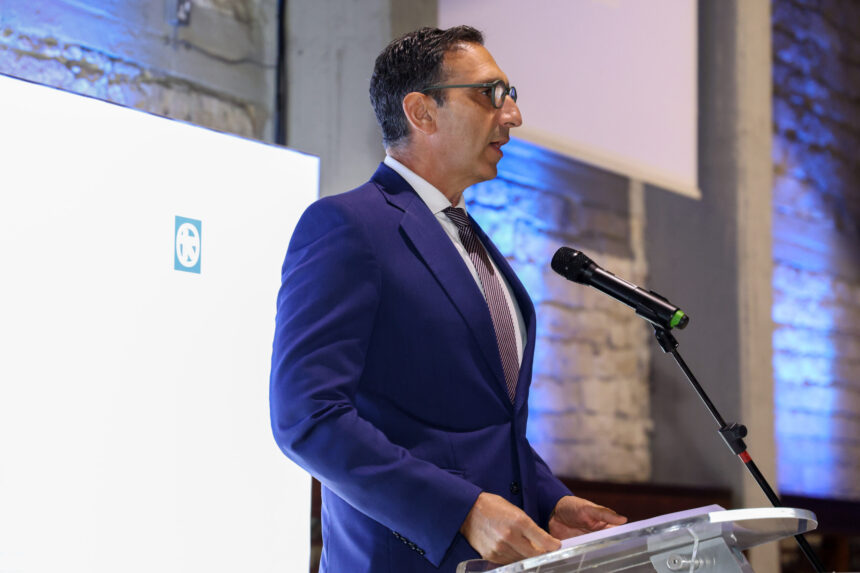
The Cyprus real estate sector faces new pressures as developers gathered in Limassol for their annual official dinner, reflecting on the industry’s significant role in the economy.
- The Cyprus real estate sector faces new pressures as developers gathered in Limassol for their annual official dinner, reflecting on the industry's significant role in the economy.
- As the Cypriot real estate sector navigates these new pressures, the balance between growth and social responsibility will be crucial in shaping the future of housing on the island.
The event, held at the Lanitis Carob Mill, featured Interior Minister Constantinos Ioannou delivering a speech on behalf of President Nikos Christodoulides. This gathering, described by the Cyprus Real Estate Developers Association as one of the most important institutional meetings of the business world, highlights the sector’s influence and its strong ties with government policy.
As property development remains a cornerstone of the Cypriot economy, the conversation is evolving. While maintaining growth is essential, issues like housing supply, affordability, and planning delays are now central to the dialogue. Ioannou’s presence at the dinner underscored the government’s commitment to addressing these challenges, particularly in speeding up licensing procedures and supporting new housing initiatives.
Recent data from the Central Bank of Cyprus indicates that property prices are continuing to rise, with apartment prices increasing by 10.8 per cent year-on-year in the first quarter of 2026. The broader residential property index also saw a 7.5 per cent increase. The strong demand, especially from foreign buyers, coupled with rising construction costs and slow new supply, is putting further pressure on prices.
Sales trends remain robust, with property sales documents increasing by 11.9 per cent year-on-year in the first five months of 2026. Limassol continues to be the largest market, recording 2,537 sales documents, an 11.2 per cent increase from the previous year. This resilience presents both opportunities and challenges for the government, as the sector’s strength is vital for investment and urban development.
However, this growth raises concerns about accessibility for younger buyers and middle-income households. Ioannou has emphasised the need for Cyprus to build “smarter”, focusing not just on speed but also on the quality of life and urban planning. He linked the government’s housing policy to faster planning procedures and incentives to increase supply. Under these initiatives, over 2,500 new homes are expected to be constructed within the next two years, including around 400 designated as affordable housing.
For developers, the message is becoming increasingly clear: the focus is shifting from mere growth to delivering affordable housing and well-planned communities. Yiannis Misirlis, chairman of the association, has highlighted affordable housing as the country’s greatest social challenge and expressed the association’s readiness to support efforts to tackle it.
As the Cypriot real estate sector navigates these new pressures, the balance between growth and social responsibility will be crucial in shaping the future of housing on the island.