Tokenised Assets Take Centre Stage in Financial Markets
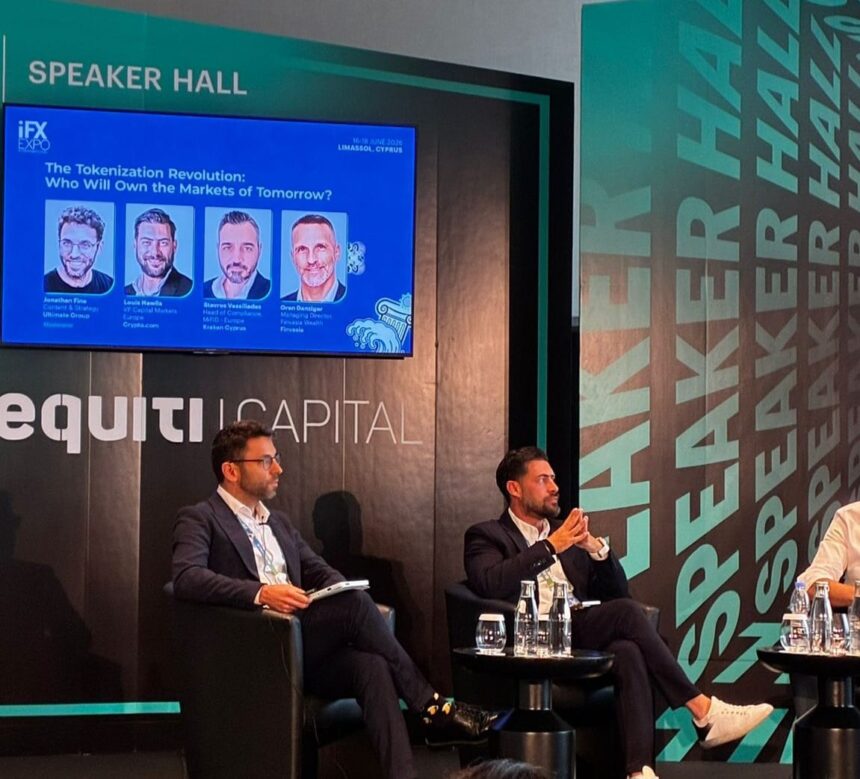
The discussion around tokenised markets has gained significant momentum, particularly during the final day of an industry gathering in Limassol. Executives from various sectors gathered to explore the implications of tokenised assets, crypto platforms, and the evolving role of traditional brokers in this new digital trading environment.
Insights from Industry Leaders
The session titled ‘The Tokenisation Revolution: Who Will Own the Markets of Tomorrow?’ featured prominent figures including Jonathan Fine from Ultimate Group, Louis Hawila, VP Capital Markets – Europe at Crypto.com, Stavros Vassiliades, COO and Executive Director at Kraken Cyprus, and Oren Danziger, Managing Director at Finvasia Wealth. The debate revolved around the shifting landscape of tokenised assets and the potential market participants best positioned to influence the future of financial infrastructure.
Who Will Lead the Transition?
Central to the discussion was the question of whether traditional financial institutions, with their established scale and regulatory experience, are more likely to spearhead the transition towards tokenised markets. Alternatively, could blockchain-native platforms, which have rapidly developed digital asset products and infrastructure, take the lead? The panellists acknowledged that while the interest in tokenisation is evident, the transition is unlikely to be swift.
Challenges to Widespread Adoption
Several challenges must be addressed before tokenisation can move beyond pilot projects and niche applications into broader market activity. Issues such as interoperability, liquidity, and the readiness of infrastructure play crucial roles in determining the pace of this transformation.
The Role of Regulation in Tokenisation
Regulation emerged as a key topic, particularly regarding frameworks like the Markets in Crypto-Assets regulation. As firms navigate potential regulatory impacts, the establishment of clearer rules could significantly influence adoption rates, competition levels, and investor confidence.
Future Outlook for Tokenised Markets
The panellists discussed the long-term perspective on tokenisation, debating whether it could fundamentally reshape capital markets within the next five years or if the industry might face a more gradual transition. This dialogue highlighted the increasingly blurred lines between digital assets and traditional finance.
Convergence of Crypto Platforms and Traditional Finance
Another session titled ‘Blurred Lines: When Crypto Platforms Trade Wall Street’ featured industry experts like Badea Alexandru Gabriel from Naga, Lior Aizik, Co-Founder and COO of XBO.com, and Andrew Theodosiou, Sales Director EMEA at Talos. This panel focused on the growing convergence between crypto-native platforms and traditional financial services as both sectors begin to overlap in asset classes and trading models.
Innovations in Trading Models
The discussion examined how crypto firms are extending their reach into equities and commodities, while traditional brokers are increasingly integrating digital assets into their offerings. A recurring theme was the rising demand for 24/7 multi-asset trading, with clients expecting broader access to products, quicker execution times, and more adaptable trading platforms.
The Balancing Act of Regulation and Innovation
Regulation continued to be a significant consideration as companies strive to balance the need for innovation with compliance, consumer protection, and the reliability of their infrastructure. As the landscape evolves, firms must navigate these complexities to remain competitive in an increasingly integrated market.