Cyprus has finally taken a significant step forward with the establishment of its first crematorium, a long-awaited facility that has been 25 years in the making. This milestone follows decades of advocacy by Maureen Watt, a Scottish funeral director who has tirelessly campaigned for this option on the island.

Photo: en.philenews.com
For years, Maureen encountered families from various communities, including British, German, and Dutch expatriates, who expressed their desire for cremation. “There is no crematorium here” became a common refrain, prompting her to take action. In 2008, she began her journey, selling funeral plans while gathering support for a cremation facility.

Photo: en.philenews.com
Her initial efforts led her to meet Clive Turner, another advocate for cremation, and together they launched a petition that garnered thousands of signatures from residents across Cyprus. Despite their relentless lobbying efforts and numerous meetings with government officials, progress was slow. Maureen recalls, “We honestly felt as though we were getting nowhere,” yet the demand for cremation was undeniable, with research indicating that 91.5% of expatriates preferred this option.
In 2016, a breakthrough occurred when the Cypriot parliament passed legislation permitting cremation, a decision that had been long debated. With a preliminary licence secured, Maureen partnered with Golden Leaves Ltd. to fund the project, which would ultimately lead to the construction of the crematorium.
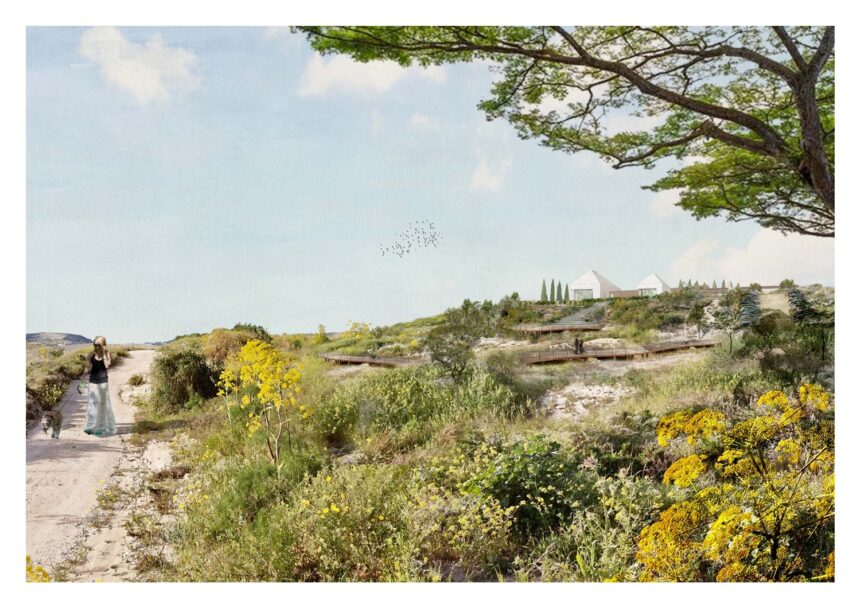
The planned facility, located in Agia Varvara, Paphos, will cover over 1,000 square metres and is estimated to cost €4 million. Construction is set to commence in September, with completion expected by 2028. This development is seen as a vital choice for families wanting to honour their loved ones’ wishes.
Public interest in cremation in Cyprus dates back to 2001, following a high-profile case where the family of Ploutis Servas, the first Secretary General of AKEL, sought cremation, highlighting a gap in services available to non-Orthodox communities. Efforts to introduce cremation legislation began shortly thereafter, but faced significant opposition from the Church of Cyprus, which did not conduct rites for cremated remains.
Maureen emphasises that the crematorium is not intended to challenge religious beliefs but to provide a choice for all communities. “It’s about offering the community the choice,” she asserts, noting that the facility will be designed with dignity and sustainability in mind.
The crematorium will feature two chapels, accommodating up to 60 and 120 guests, respectively, and will be open to individuals of all faiths and those seeking secular services. Families will have the option to hold traditional church services before proceeding to the crematorium for final farewells.
In a bid to ensure accessibility, documentation will be available in multiple languages, including Greek, English, Chinese, and Russian. Maureen hopes this facility will also serve families from neighbouring countries looking for cremation services.
Currently, individuals wishing to register their preference for cremation can do so at the Paphos District Office. Maureen advocates for a broader registration process, arguing that it should not be limited to one area, especially considering the tragic circumstances that can arise unexpectedly.
The absence of cremation options has historically forced families to incur significant costs for repatriation or face the burden of burial in a foreign land. Maureen recounts how the Covid-19 pandemic intensified these struggles, as flights were grounded and families found themselves unable to honour their loved ones’ wishes. “There are some people buried here that did not want to be buried,” she reflects, highlighting the need for change.
Ultimately, the establishment of the crematorium signifies a monumental shift for Cyprus, reflecting a community’s desire for dignity and respect in end-of-life choices. Maureen’s commitment over the years has paved the way for families to finally have their wishes recognised and fulfilled.