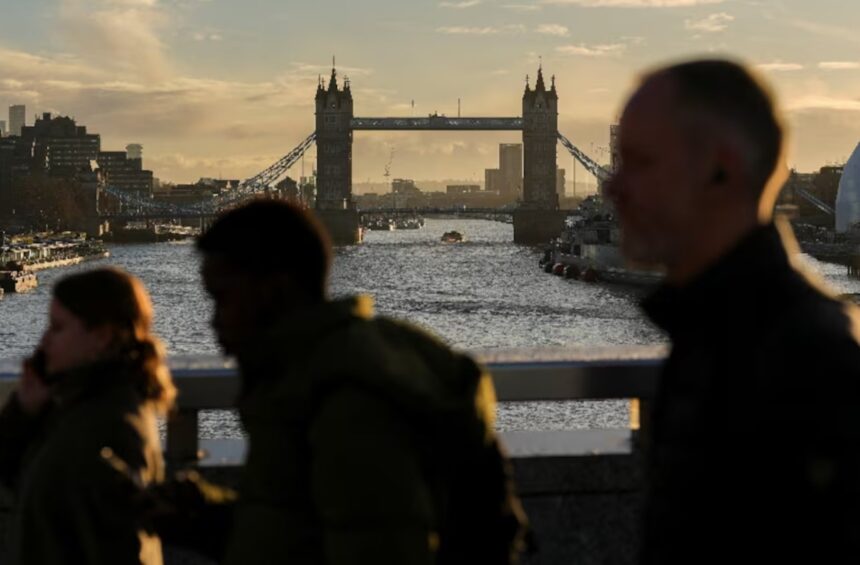
UK employers have curbed hiring as the war in Iran casts a long shadow over the labour market. Recent data from the Office for National Statistics (ONS) illustrates a significant drop in job vacancies and payroll numbers, signalling a downturn that has raised concerns among economic analysts.
Labour market: Sharp Decline in Job Vacancies
In April, the number of job vacancies fell to 705,000, marking the lowest level since February 2021. This decline comes as businesses reassess their hiring strategies in light of geopolitical tensions, particularly the ongoing conflict in the Middle East.
Payroll Data Highlights Economic Strain
Early payroll figures from the tax office indicated a notable decrease of 100,000 jobs compared to March, with revisions to prior months suggesting an ongoing trend of weakening in the job market. This drop is the largest since May 2020, coinciding with the onset of the COVID-19 pandemic, which adds a layer of complexity to the current economic landscape.
Unemployment Rates on the Rise
The unemployment rate has also seen an uptick, rising to 5 per cent for the first quarter from 4.9 per cent in the previous three months. This increase raises additional challenges for Prime Minister Keir Starmer as he navigates the political landscape amid growing economic pressures.
Wage Growth Slows Amid Economic Uncertainty
Wage growth has also slowed, with figures revealing a 3.4 per cent increase in the first quarter compared to the same period last year. This represents the slowest growth rate since 2020. When adjusted for inflation, average weekly earnings excluding bonuses grew by only 0.3 per cent annually in the three months to March, further complicating the financial outlook for many workers.
Impact of Rising Costs and Political Climate
Employers have increasingly voiced concerns over rising payroll taxes and new regulations aimed at enhancing worker rights, which they argue have made hiring more costly. Jack Kennedy, a senior economist at jobs platform Indeed, remarked, “The latest figures point to a labour market feeling the strain,” linking the current downturn to both the conflict in Iran and a volatile domestic political climate.
Investor Sentiment Shifts
The uncertainty stemming from the conflict has prompted investors to reassess their expectations regarding interest rate hikes from the Bank of England (BoE). Economists like James Smith from ING have noted that the recent payroll data, coupled with slower wage growth, casts doubt on the likelihood of rate increases in the near future. Investors have reduced their expectations from the BoE, now pricing in about two quarter-point increases through 2026, down from earlier projections.
Potential for Further Weakness in Job Market
Allan Monks, an economist at JP Morgan, indicated that additional signs of weakness in the jobs market could dampen the BoE’s appetite for rapid rate hikes. Inflation data set to be released soon will be crucial for determining whether inflationary pressures are beginning to ease.
Sector-Specific Impacts on Hiring
Particularly affected by the downturn are lower-paying sectors such as hospitality and retail, which have experienced some of the most significant declines in payroll numbers and job vacancies. The current economic climate, exacerbated by the Iran war, has led many businesses to reconsider their hiring plans.
Concerns About Long-Term Economic Growth
Surveys conducted in April revealed that many firms are worried about the economic outlook and inflationary pressures related to the conflict. This has led to a general pullback in hiring intentions, further complicating the labour market situation. The fast-paced growth seen in early 2026 is now at risk due to these ongoing uncertainties.
Looking Ahead: The Future of Employment in the UK
As the labour market continues to feel the effects of international conflicts and domestic political challenges, the future remains uncertain. With Prime Minister Starmer facing potential leadership challenges within the Labour Party, questions regarding economic policy loom large. The interplay between global events and local economic conditions will be critical in shaping the trajectory of employment in the UK.