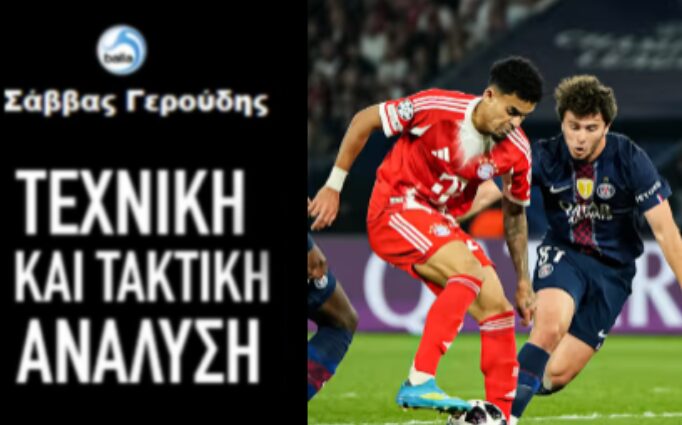
tactical analysis — The tactical analysis of the clash between Bayern Munich and Paris Saint-Germain reveals the intricacies of the game that ended in a 1-1 draw, yet saw the Parisians advance to the Champions League final for the second consecutive season.
Tactical analysis: Stakes Set High
The return leg in Munich was charged with excitement, especially considering Bayern’s need to overturn a first-leg deficit. In the Bundesliga, Bayern had been formidable, yet Paris showed resilience in their domestic campaign. With both teams boasting star-studded line-ups, the stakes were undeniably high for a place in the final.
Formation Dynamics
The formations deployed by both sides were pivotal in shaping the game’s flow. Bayern set up in a classic 4-2-3-1, looking to dominate possession and utilise their wingers. On the other hand, PSG lined up in a 4-3-3 formation, aiming to exploit the spaces left by Bayern as they pressed forward.
On the flanks, the match evolved into a tactical 2v2 battle, especially with Bayern’s wing-backs pushing high. This setup allowed both teams to counter effectively, with each trying to outmanoeuvre the other’s wing play.
Key Moments That Defined the Match
The encounter was filled with pivotal moments, but the turning point came when Bayern opened the scoring through a well-worked move that showcased their attacking prowess. However, this lead was short-lived as PSG responded swiftly, showcasing their own attacking capabilities with an equaliser that turned the tide of momentum.
As the match progressed, it became evident that the midfield battles were crucial. Bayern’s midfielders struggled to maintain control against a well-organised PSG side that expertly transitioned from defence to attack.
Standout Performers
Several players shone brightly in this high-stakes encounter. Bayern’s goalkeeper made crucial saves to keep his team in contention, while PSG’s forward line demonstrated their clinical finishing ability, particularly in the moments leading to their equaliser.
Statistical Insights
Analyzing the statistics offers further insight into the match dynamics. Bayern held 58% possession, indicating their attempts to control the game, while PSG’s 42% showcased their effectiveness in transitioning quickly to counter-attacks.
In terms of chances created, Bayern registered 14 shots with 6 on target, compared to PSG’s 10 shots, with 4 finding the mark. The xG (expected goals) metric also reflected the efficiency of PSG’s finishing, ultimately leading to their progression in the tournament.
Lessons Learned
This tactical battle not only highlighted the strengths and weaknesses of both teams but also served as a reminder of the unpredictability of knockout football. Bayern’s dominance in possession did not translate into a victory, while PSG’s resilience and strategic countering proved decisive.