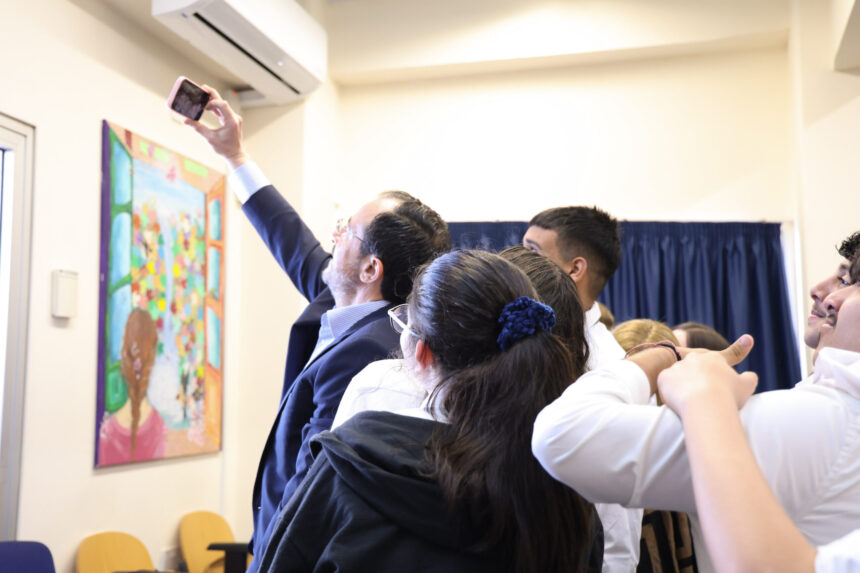
cyprus role — cyprus role — The ongoing conflict in the Middle East was at the forefront during a recent meeting between President Nikos Christodoulides and students from Larnaca. The president highlighted Cyprus’ unique position as a mediator in a region plagued by war since 1948.

Photo: cyprus-mail.com
Speaking to the lyceum students, Christodoulides expressed Cyprus’ desire to be part of the solution rather than the problem. He reassured the young audience that the Republic was not involved in any military operations and emphasised its role in fostering dialogue among all parties. “It is important that the Republic of Cyprus is not part of the problem, but part of the solution,” he stated, underscoring the need for unity and European solidarity.
His remarks coincided with the ongoing EU presidency of Cyprus, a period he deemed crucial for effective communication with other nations. “Italy, France, Spain, and Greece responded to our call to help us at this difficult time,” he noted, showcasing the collaborative efforts during regional turmoil.
The president addressed the students’ concerns about safety, stating that the well-being of the Cypriot people remains the government’s top priority. He acknowledged the EU’s distant influence on daily life, asserting that Cyprus’ membership has been the nation’s most significant diplomatic achievement, one that will inevitably shape the future of the island’s ongoing division.
Turning to education, Christodoulides shared his vision for reform, aiming to streamline the curriculum to foster critical thinking among students. He denounced the oversaturation of certain professions, stating, “In Cyprus, we don’t need any more lawyers and accountants.” Instead, he advocated for aligning educational pathways with market demands to ensure students can secure rewarding employment and pursue their life goals.
Highlighting the importance of vocational education, he revealed initiatives aimed at guiding young people into sectors that are vital for the economy. “Through education, we want to bring more young people into the primary sector,” he explained, reflecting on the need to enhance local production and reduce dependency on imports.
Christodoulides also addressed the challenges faced by the middle class, acknowledging its decline and the government’s efforts to reverse this trend. He pointed out that while unemployment rates are low, the need for higher wages remains a pressing concern. “We don’t have an unemployment problem, but we must bring salaries up,” he asserted.
Education Minister Athena Michaelidou, present at the event, reinforced the importance of education in driving economic growth. She acknowledged that Larnaca has historically received less innovation and infrastructure investment compared to other areas. Her comments highlighted the government’s commitment to enhancing technical education and ensuring graduates are better prepared for the job market.